- 0:40 h
- 1.46 km
- 32 m
- 32 m
- 879 m
- 906 m
- 27 m
- Start: Ried-Brig
- Destination: Ried-Brig
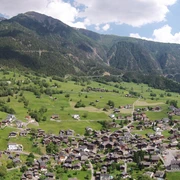
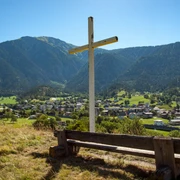
The nature trail can be reached after an hour-long hike from Brig over the Biela. Alternatively, you can take the post bus to Ried-Brig. The Achera Biela is an important part of the cultural heritage of the Ried-Brig/Termen region and was declared a nature reserve of cantonal importance in 1994. The 24-hectare area is home to a variety of valuable habitats, some of which have become rare: traditional and near-natural arable crops, species-rich rough meadows, rock steppes, suonen, dry stone walls and terraces. At the end of the circular trail you will return to Brig on foot after half an hour.
It is forbidden:
- Let dogs run free
- Leaving the paths
- start a fire
- Damage to and disturbance of animals, plants and habitats
- Accommodation and camping
- Discarding and leaving waste lying around
- Leaving dog excrement lying around

Good to know
Pavements
Best to visit
Directions
Tour information
Cultural Interesting
Loop Road
Stop at an Inn
Equipment
Directions & Parking facilities
Additional information
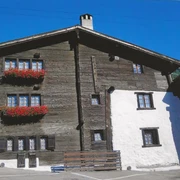
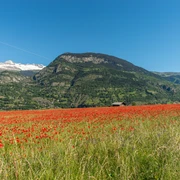
For centuries, the Achera Biela in Ried-Brig and Termen was regarded as the arable farming area on the Brigerberg. The Romans brought the grain over 2000 years ago to the Valais, where it was cultivated in the dry areas and soon became part of the typical landscape. In the course of time, the characteristical cultural landscape with terraces, dry stone walls, barns etc. developed. Until the middle of this century this agriculture shaped the picture. From the end of the Second World War onwards, the number of fields decreased continuously. In the Achera Biela area, the decline was so drastic that in the sixties arable farming practically came to a standstill. Bernhard Gemmet, organic farmer in Ried-Brig, was the driving force behind the renaissance of traditional agriculture in the seventies. He was one of the first to cultivate winter cereals again, using modern machinery on plots of land that had been folded, but in a traditional way. Several farmers followed his example, so that today the area under cultivation is again just under 5 hectares. This area is divided among 6 farmers, whereby the areas cultivated per farmer vary in size. The seeds of the so-called field weeds survived the interruption of cultivation in the soil. Today a rich, colourful arable flora can be admired again: Cornflower, corn cockle, field wheat, larkspur, etc. In order to preserve this valuable flora, it is necessary to grow winter cereals.
On 30.6.1999, the State Council of the Canton of Valais placed the area under nature conservation. It comprises around 24 hectares of agricultural land, which corresponds to about 6% of the total agricultural area of the municipality of Ried-Brig. Of the 14.3 ha of open arable land still cultivated in Ried-Brig in 1998, almost 5 ha are located in the nature reserve, which corresponds to a share of 31%. In addition, the steppe grasslands, brownfields, traditionally irrigated meadows, hedges and shrubs are of great ecological importance. It goes without saying that the area is home to rare, special and typical animal species: Wryneck, butterfly-like, field cricket, emerald lizard to name but a few.
Literature
Author´s Tip / Recommendation of the author
Safety guidelines
Map
Nearby